
Reviewed · STIRLING CASTLE DAY TRIPS
Stirling: Historical Walking Tour in Spanish
Stirling is where Scottish history gets political, physical, and human all at once. This Spanish walking tour strings together the big power points, from fortified city walls and independence-era strategy to a church tied to a coronation.
I love how the walk stays focused on major places like Stirling’s fortress legacy and the Church of the Holy Rude, not just random streets. I also like that you get both sides of the story, the planning and the punishment, including Britain’s worst jail of the 19th century. A possible drawback is that it can feel fast-paced in Spanish, so if you struggle with speed, it’s worth mentally preparing for lots of narration in 90 minutes.
Small-group tours can still feel intimate, and the guide names you might hear in praise include Ara and Lorena, both noted for being attentive and for keeping the anecdotes coming in an engaging way.
Key things to know before you go

- Medieval walls and high ground: you’ll walk the old defensive edge of Stirling and reach the highest part of the city.
- Independence-era strategy: Stirling mattered in the 14th-century wars between Scotland and England.
- The Old Jail reality check: you’ll hear why Stirling’s 19th-century jail was so notoriously harsh.
- Mercat Cross and King Street: expect cultural stops that connect daily life with bigger events.
- Holy Rude Church, King James VI: the coronation connection is a rare, standout detail.
- Small group, up to 10: better chances to ask questions and keep pace with the guide.
Why Stirling Is Called the Door to the Highlands

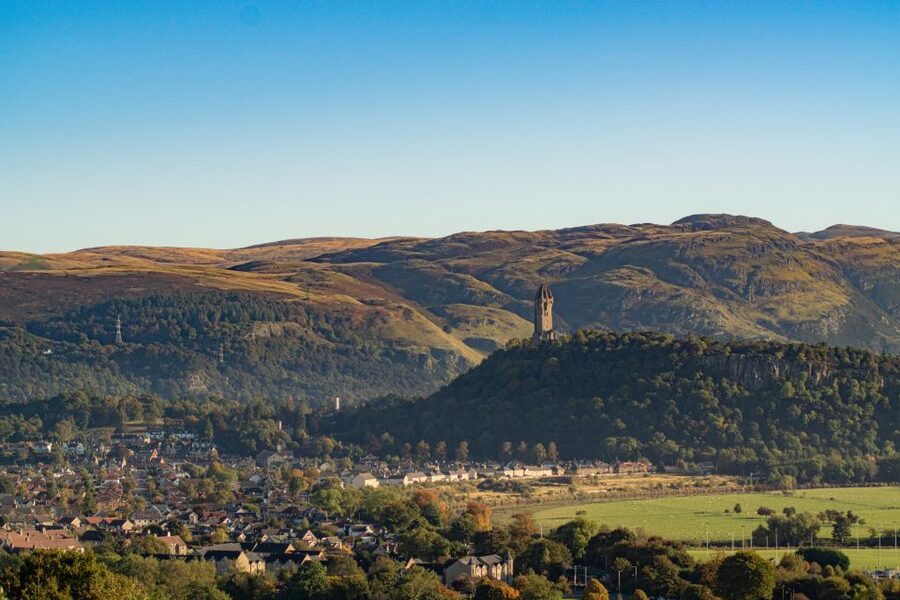
Stirling sits in a place that has always mattered for control. Whoever held Stirling had leverage over routes heading toward the Highlands, and that’s why you’ll hear it described as a key gateway. This tour leans into that idea by treating the town like a map of historical decisions, not just a set of photo stops.
The walking route focuses on how Stirling operated as one of Scotland’s major strongholds, named as one of the three most important in the country. That matters because it explains why the town kept showing up in conflicts. In the 14th century, Stirling was key in the wars of independence between Scotland and England, meaning it was not a side character. It was part of the chessboard.
You’ll also get a sense of how power showed itself in everyday space. The tour includes the medieval wall walk, then climbs toward the old market area on higher ground. From there, you connect fortifications to civic life, including where public executions were held. It’s history you can actually picture, because you’re moving through the physical “why” behind the stories.
More Stirling Castle day trips:
- From Edinburgh: Loch Lomond, Stirling Castle & Kelpies Tour
★ 4.6 · 2,360 reviews - Loch Lomond, Kelpies & Stirling Castle Tour Including Admission
★ 4.5 · 1,305 reviews - Edinburgh: Loch Lomond, Stirling Castle and the Kelpies Day Tour
★ 4.5 · 1,198 reviews
Price and value for $24 in a small group
At $24 per person for about 1.5 hours, the value here comes from two things. First, this is a dense route. You’re not spending your time on long transitions. In 90 minutes you hit multiple anchor sites, including the jail, the Holy Rude Church, and the medieval wall area.
Second, you’re paying for a local guide, and the format is built for live explanation. The tour includes local guides, but it does not include an audio guide, so you’re fully dependent on the guide’s storytelling. That sounds limiting, but it also means you get interpretation on the spot, not a neutral headset track.
For the cost, you should expect a compact, guided history focused on key locations. If you like slow museum-style pacing, this might feel like a brisk “greatest hits.” But if you like to get your bearings quickly and then keep exploring on your own, it’s a solid deal.
Meeting at Caffe Nero and what to expect in Spanish
You’ll meet inside Caffe Nero, with staff there to check you in. Plan to arrive at least 15 minutes early. That buffer matters because the tour starts as a group, and Spanish tours work best when everyone is settled before the guide begins.
The tour is live guided in Spanish. That’s great if Spanish is your working language, but if you’re learning or you’re rusty, you’ll want to be mentally ready for full-speed explanation. One past participant noted the guide can speak a bit quickly, while still praising the attitude highly. Translation here is not the point, comprehension is.
Good news: the group is limited to 10 participants, which usually helps with questions and with hearing the guide clearly. You’re also told the route will be adapted in all weather except extreme conditions to minimize rain or snow exposure. That’s not just comfort. It affects how smoothly the climb and walking segments happen.
You’re not getting hotel pickup and drop-off. So you’ll want to treat this as a “start locally and walk it” tour. Put on comfortable shoes, because this is a walking route with a climb to the higher part of the city.
Walking Stirling’s medieval wall and the high-ground viewpoint
One of the best ways to understand Stirling is to see it from the edges and the heights. This tour takes you along Stirling’s medieval wall, which gives you a sense of defense and control that flat city streets can’t provide.
As you move, the guide connects places to historical roles. The wall walk sets the tone for why Stirling was so hard to ignore. Fortifications were not decoration. They were an argument in stone, about who could hold the town and who could move through it.
Then you go up to the highest part of the city, where the old medieval market was located. Even if you have no interest in medieval markets, the point is the setting. Markets were central to how cities functioned, and placing it on higher ground ties daily economic life to the same geography used for power.
This area also connects to public executions. You’ll hear that executions were carried out there, which brings a darker realism to the fortifications. The tour’s strength is that it doesn’t keep everything heroic. It shows that control was enforced in very direct ways.
More walking tours in Edinburgh:
- Edinburgh: Harry Potter Magical Guided Walking Tour
★ 4.8 · 11,944 reviews - Edinburgh Castle: Guided Walking Tour with Entry Ticket
★ 4.7 · 11,699 reviews - Underground Vaults Walking Tour in Edinburgh Old Town
★ 4.5 · 8,506 reviews - Edinburgh Castle: Guided Walking Tour with Entry Ticket
★ 5.0 · 5,540 reviews
King Street and Mercat Cross, where culture meets power
After the wall walk and the climb, you’ll spend time in the older core, including King Street and Mercat Cross. This is where the tour shifts from defense to identity, from “who can control the town” to “who lived in it and what symbols mattered.”
King Street is a standout because the guide links it to famous poets and to the city’s most relevant buildings. That’s a smart mix. If you only hear military history, you’ll walk away knowing battles but not the human texture. Adding poets and cultural references helps you see Stirling as more than a strategic target.
Mercat Cross is a great reminder that public space mattered. Markets, announcements, and civic identity often clustered around such landmarks. On a walking tour, it’s also a useful visual anchor, a place you can point to and say, that’s where community life turned into public action.
From here, you start threading toward the judicial and civic institutions: the tour includes stops like the Tollbooth and the John Cowane Hospital later, but the emotional logic starts here. You see where things were decided and where consequences landed.
Old Jail and Tollbooth: the most uncomfortable part of the story

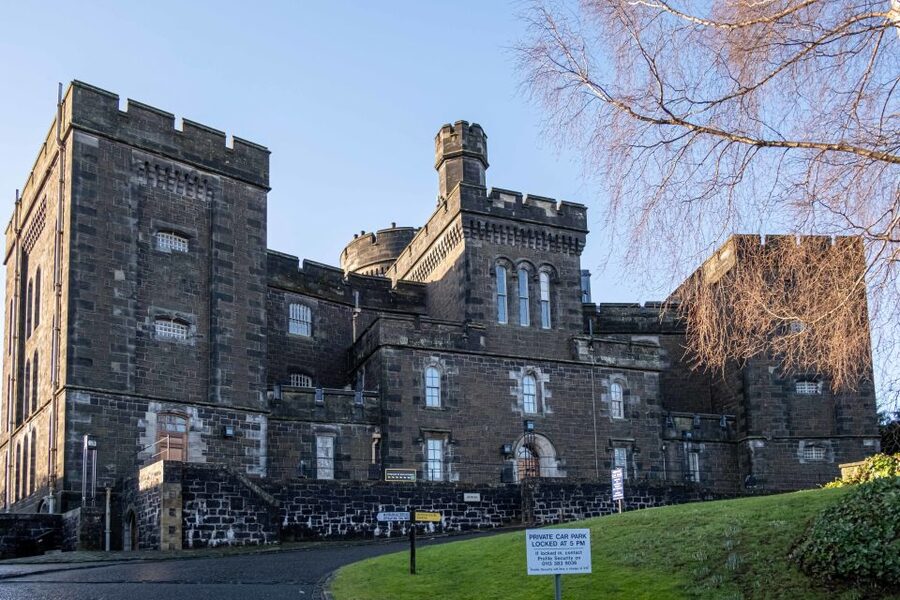
If you’re expecting a cheerful stroll through medieval Scotland, this is where the tone changes. The tour takes you to the Old Jail, described as Britain’s worst jail of the 19th century.
And it’s not a vague description. You’ll hear what made it infamous: it was wet and nasty, cramped with prisoners including men, women, and children. It wasn’t only one kind of offender either. Ages ranged from minor offenders to adults, with people accused of murder, people awaiting trial, and debtors.
This is a difficult stop, but it’s also one of the most valuable. Jail stories teach you how societies handled fear and order. It also gives context for how authority worked in everyday life. If you’re the type who wants history to feel real, this section delivers.
You’ll also see the Tollbooth, which adds another layer to the power structure of the time. Even without extra background, it signals administrative and legal control. Together, the jail and tollbooth help you understand that enforcement was not separate from civic life. It was baked into how the town ran.
Practical note: because this is emotionally heavier, you might want a quick mental reset at the next stops. The route does keep moving, and it doesn’t leave you stuck in one grim theme.
John Cowane Hospital, the Old Cemetery, and everyday Stirling

After the jail and legal symbolism, you move into places that feel more grounded in daily life: the John Cowane Hospital and the Old Cemetery.
This portion of the tour matters because it stops the story from being only about battles and institutions of punishment. A hospital in a historic town can tell you about community care, even when the exact details aren’t the focus of the walk. It’s a different kind of order, one that still reflects how a society organized itself.
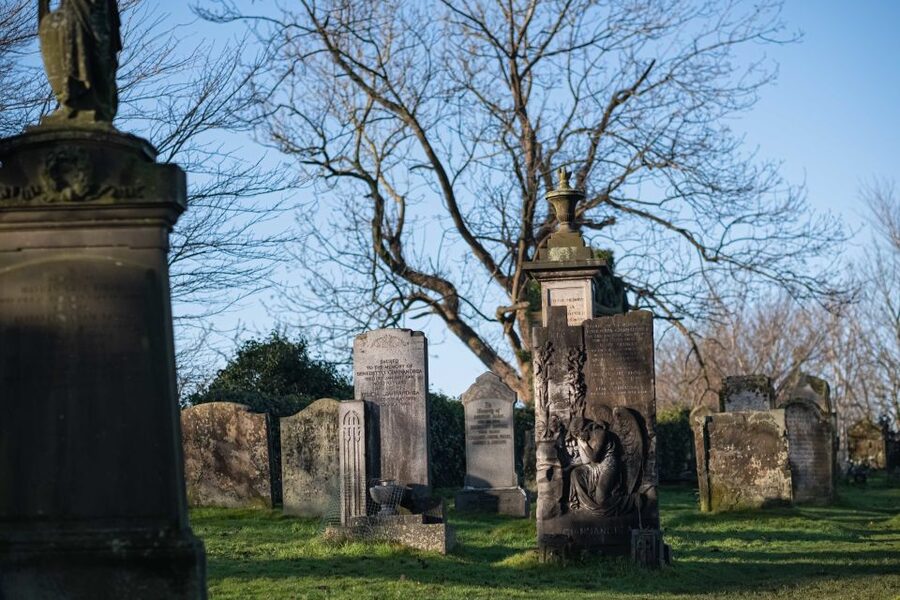
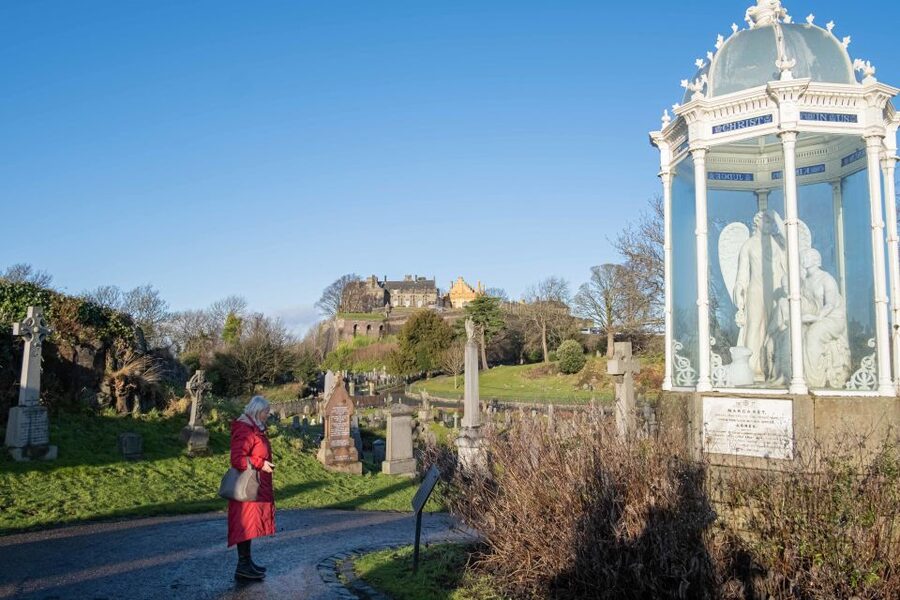
The old cemetery adds yet another angle. Cemeteries are where you see continuity. You also notice how the physical space of a town remembers people long after political stories fade. On a walking route, this helps you feel the time scale. Stirling is not only about one dramatic century. It’s about repeated human lives laid down across generations.
If you like tours that keep shifting the emotional register instead of treating every stop like a lecture, this is the section that balances the heavier sites.
Pyramid Star and the market-and-executions connection
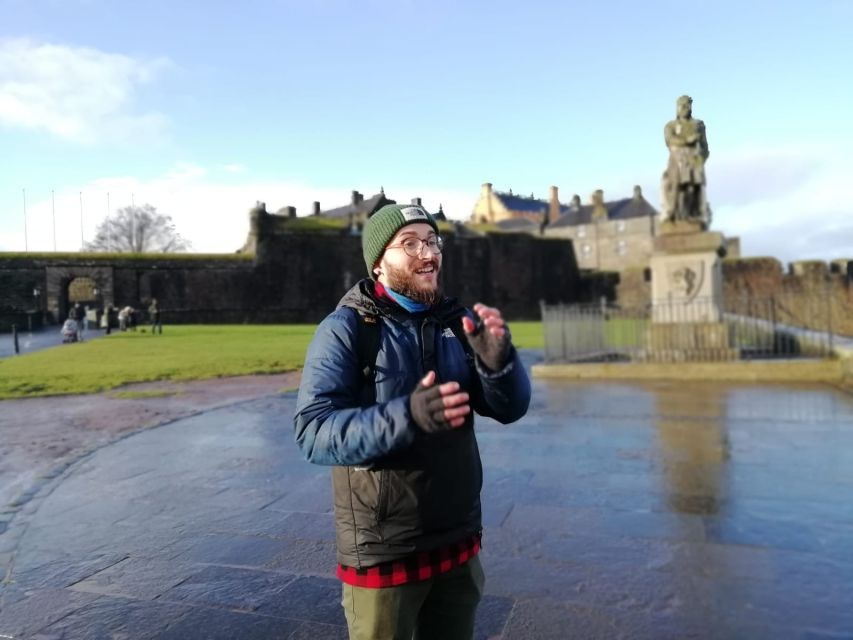
Near the later part of the walk you’ll encounter Pyramid Star. Without inventing extra context, it still functions as a moment to reorient. On a route like this, you need periodic landmarks that help you mentally connect what you saw earlier with where you are now.
And then you tie back to the high point: the old medieval market and the location of public executions. This is one of those “make the map click” moments. You’ll understand why the guide brought you uphill and why the tour treats that area as central.
Think of it this way. Fortifications explain how the town defended itself. Public executions and market life explain how the town controlled public behavior and economic activity. Put them together and Stirling stops being abstract. It becomes a place where power, commerce, and law shared the same geography.
That’s the value of walking this route instead of reading it. Your body remembers the climb, and your eyes can trace how the town’s layout supported control.
Church of the Holy Rude: King James VI’s coronation link

The final major highlight is the Church of the Holy Rude. This is where the tour earns its big historical bragging rights.
You’ll learn that this church hosted the coronation of King James VI, the son of Mary Stuart. The tour also emphasizes the uniqueness of the setting: it’s the only church still in use in Great Britain to have seen coronations like this, with Westminster Abbey being the other key parallel.
This is one of the best stops for anyone who wants “history you can verify with your eyes.” A church survives, and it continues to operate. That gives you a direct line from the past to the present day, even when centuries have passed. You’re not just imagining what happened. You’re seeing a place where the setting still exists.
From a storytelling standpoint, the contrast works. Before Holy Rude, you’ve dealt with fortifications, trials, and punishment. Then the tour ends on a site tied to royal ceremony. It’s like watching the same city perform under different rules, political and religious authority in the same streets.
Who should book this Stirling Spanish walking tour
This is a strong fit if you:
- Like guided history that stays focused on key sites rather than long detours.
- Want a small-group experience that covers a lot in 90 minutes.
- Speak some Spanish and want to practice with real-world context.
- Are curious about how Stirling shaped major conflicts, not only Scottish legends.
You might skip it if:
- You prefer quiet, slow pacing where you can read details yourself without much spoken explanation.
- You rely on audio support, because there is no audio guide included.
Should you book this tour or pass?
I’d book it if your priority is a tight introduction to Stirling’s major storylines: fortified city strength, independence-era relevance, and the uncomfortable human realities of the Old Jail, capped by the Church of the Holy Rude and the coronation connection. For $24 in a 10-person small group, it’s hard to beat the efficiency.
I would hesitate only if fast Spanish narration will stress you out. If you’re comfortable with spoken Spanish and you enjoy live guides who share anecdotes, this tour is likely to feel fun and educational at the same time.
If you’re the type who likes to leave a town with a mental map, plus a few stops you can revisit later, this one gives you exactly that.
FAQ
What language is the tour in?
The tour is guided in Spanish.
How long is the Stirling historical walking tour?
It lasts 1.5 hours.
Where do I meet the guide?
You meet inside the coffee shop Caffe Nero. Staff will be waiting there to check you in.
Is there an audio guide included?
No, an audio guide is not included.
How big is the group?
The group is small, limited to 10 participants.
Does the tour run in bad weather?
It runs in all weather except extreme conditions. The route can be adapted to minimize exposure to rain or snow.
More History Tours in Edinburgh
- Edinburgh: Edinburgh Castle Guided History Tour with Tickets
★ 4.8 · 7,747 reviews - Edinburgh: Whisky Tasting with History and Storytelling
★ 4.9 · 2,451 reviews - Edinburgh: Old Town History and Tales Walking Tour
★ 4.8 · 2,361 reviews - Old Town Walking Tour History and Tales in Edinburgh
★ 5.0 · 2,168 reviews
Recently reviewed around Edinburgh
- Private Glencoe Driving Tour from Edinburgh★ 5.0 · 51 reviews
- Private Edinburgh City Half-Day Tour★ 5.0 · 65 reviews
- The 10 Tastings of Edinburgh With Locals: Private Food Tour★ 4.5 · 71 reviews
- Privately Guided Day Tour of Glasgow in Luxury Minivan★ 5.0 · 17 reviews
- Edinburgh Unveiled: Luxury Private Driving Tour of Edinburgh★ 5.0 · 9 reviews
- Private Edinburgh & Rosslyn Chapel Tour★ 5.0 · 5 reviews
- Private Edinburgh driving tour★ 5.0 · 6 reviews
- Privately Guided Day Tour of Edinburgh in Luxury Minivan★ 5.0 · 3 reviews
Stirling Castle Day Trips, side by side.


Loch Lomond, Kelpies & Stirling Castle Tour Including Admission
Read our review →
Loch Lomond, Stirling Castle and the Kelpies Day Tour
Read our review →


Rosslyn Chapel, Dunfermline Abbey and Stirling Castle Day Tour
Read our review →

Loch Lomond, Stirling Castle, & Kelpies Tour from Edinburgh
Read our review →Lists this tour turns up in