
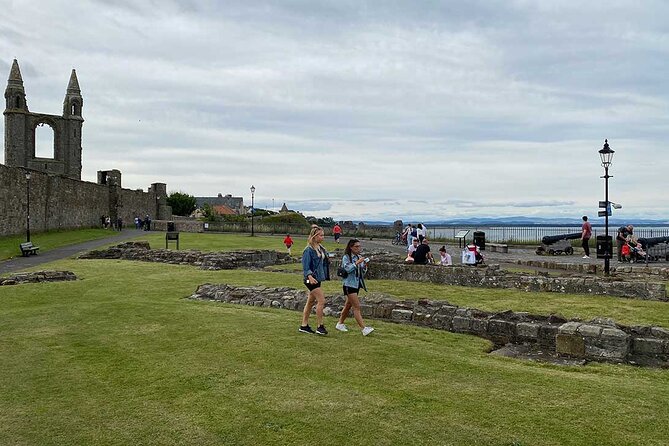
Reviewed · ST ANDREWS & FIFE DAY TRIPS
St Andrews History Tours
St Andrews has a way of packing centuries into a few quiet streets. On this history tour, you follow a local historian, Richard Falconer, past the places that shaped the town, the university, and even the Catholic past of St Andrews Cathedral. The tone is part scholarship, part storytelling, with the darker corners of the town kept front and center.
Two things I especially liked: the small walking format that keeps the pace human, and the fact that you get access to the most historic quarters of the University of St Andrews rather than just watching from the sidelines. You also hear about big names like Mary Queen of Scots, plus the town and university’s long search for the cathedral’s lost treasure.
One drawback to consider: you need a moderate fitness level, and it’s not suitable if you walk slowly or have walking difficulties. If your mobility is limited, you may find the route tougher than it looks on paper.
Key highlights you will actually feel on your feet
- Richard Falconer guide style: enthusiastic, well researched, and quick to answer questions
- University access on foot: you see the historic quarters of the oldest university in Scotland
- Dark-and-creepy stories, not just dates: legends, ghosts, and the town’s uneasy past
- Cathedral plus castle in one sweep: from former Catholic power to Reformation-era change
- Harbour time you can miss on your own: St Andrews coastal beauty that many visitors skip
- A value you can justify: about 1.5 hours for around $20.59 per person, with a private group feel
Why this St Andrews history walk feels different than a drive-by
This is the kind of tour that helps you understand why St Andrews matters beyond golf. Yes, you’ll be in golf country. But your route is really about the town’s big story themes: religion, education, power shifts, and the ordinary people who lived inside all that.
What makes it work is how it’s built around close-up walking. You stop often. You look at buildings and street layouts long enough to notice details. And your guide ties each stop to the next one so it feels like a connected narrative, not a checklist.
And it’s private. Only your group participates. That matters because you can ask questions as you go, instead of waiting until the end when the group has moved on.
More St Andrews and Fife day trips:
- St Andrews Must-Sees Daily Walking Tour (11am & 2pm)
★ 5.0 · 478 reviews - St Andrews: Golf Origins and Old Course History Tour
★ 4.7 · 322 reviews - St Andrews: Top Sights Guided Walking Tour
★ 4.7 · 223 reviews
Richard Falconer and the private-group pace that keeps everyone engaged
You’ll start the tour with Richard Falconer, and he sets the tone fast. Expect stories told with energy, but also with care. People come for history. They stay because the guide keeps it lively, and because he answers questions without treating them like interruptions.
The pacing is another win. At about 1 hour 30 minutes, the tour is long enough to hit the main anchors, but short enough that you do not feel dragged. In my view, this is a sweet spot for St Andrews. It’s a town where even small distances feel meaningful, so a compact tour plan keeps your attention sharp.
If you like asking what something was used for, or why a building looks the way it does, this format supports that. If you hate standing around waiting for others, this also helps. The walking stops are short and focused.
Getting your bearings at the start, then walking into the old city core
The meeting point is The Bothy St Andrews, 3 Church Square. That’s a practical spot to orient yourself in town before you start moving through the historic center.
Tours finish by the Central Bar at the top of College Street near Market Street, at 75 Market St. That end location is handy, because it puts you close to easy options for grabbing a drink or continuing the day on foot.
Start time is 2:00 pm, so I like it as a mid-afternoon plan. You can do a slower morning, then let the tour sharpen your understanding before you wander on your own.
St Mary’s College: a 16th-century university move against heresy
One of the first stops is St Mary’s College, described as a haven off the beaten track. This is the sort of place that makes the tour feel like more than a highlight reel.
You’ll hear about St Andrews’ third college, built in 1538, created to combat heresy. That detail does more than add a fact. It explains why education and religion were inseparable in this part of Scotland. It also helps you understand why the later religious upheavals hit the university so hard.
Practical note: college grounds can be calm and visually dense. If you’re the type who likes taking photos, this stop is a good one. Just keep your phone put away for the explanation until you’ve heard what to look for, so you do not miss the story behind the stone.
More history tours in St Andrews:
- St Andrews: Town, Golf, and Old Course History Tour
★ 4.7 · 162 reviews - St Andrews Old Course History Tour, for the Golfer
★ 4.5 · 150 reviews - St Andrews Tours: Town, Golf and Old Course History
★ 5.0 · 138 reviews - St Andrews: 90-Minute Historical Walking Tour
★ 4.8 · 23 reviews
St Leonards School: the legacy of a private education power center
Next up is St Leonards School. The tour frames it as the top private school in Scotland, and it also connects the school to the Queen Mother’s early education.
Even if you are not a school-history person, this stop helps you see how St Andrews isn’t only about medieval churches and ruined castles. It also has a long tradition of institutions shaping social life, not just religious life.
If your group includes teens or older kids, this stop tends to land well because it feels more modern than some of the other stops, while still being rooted in the town’s identity.
The Pends: the pilgrims’ entrance and the route through the Cathedral priory precincts
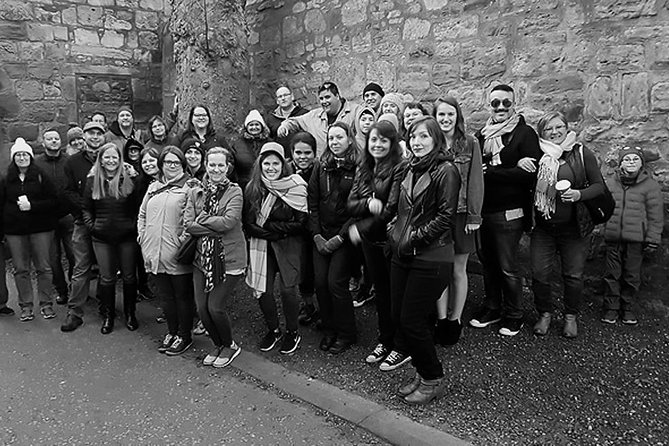
Then you walk through The Pends. This is framed as the only entrance to the city for pilgrims, and it’s tied to the journey along the thoroughfare through the former priory precincts of the Cathedral.
What I like about this stop is the street-level perspective. You start to see St Andrews like a visitor would have hundreds of years ago. Instead of imagining the Cathedral as a standalone ruin, you get the sense of approach, procession, and movement through the sacred zone.
This is also where the tour’s legend-and-ghost storytelling fits naturally. Pilgrimage routes and religious precincts tend to collect stories over time. Even when you treat the legends as just that, they still help you feel what the area was like.
St Andrews Harbour Trust: beauty on the coast, not just in textbooks
A lot of first-time visitors focus on the big named landmarks. The harbour area gets less attention, which makes this stop a smart inclusion.
You visit St Andrews harbour at an area of great beauty that’s easy to miss when you’re speeding through. In practice, it’s also a nice reset. After religious buildings and university corners, the harbour gives you open air, sea light, and a different kind of history, tied to work and daily life.
If the weather is clear, the harbour is where you can get those photos that do not feel like they were taken in a crowded viewpoint. On a grey day, the harbour still works because the mood matches the town’s darker storytelling tone.
St Andrews Cathedral: from Catholic seat of power to the search for a lost treasure
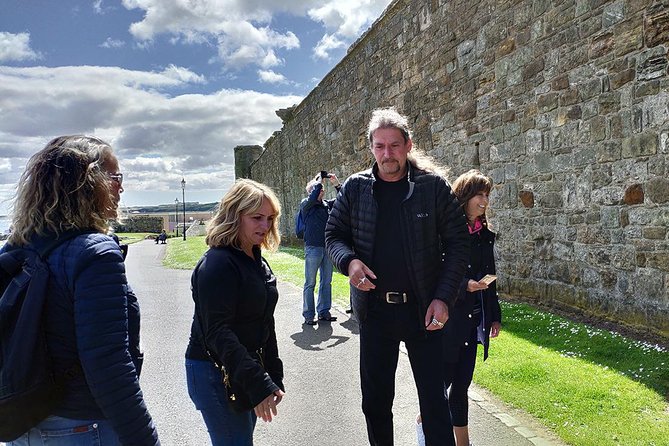
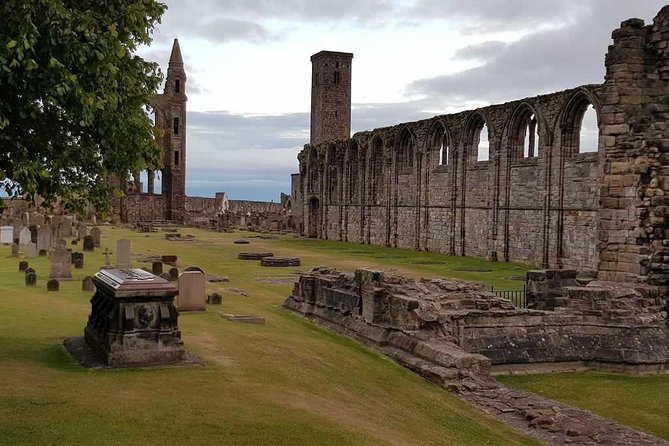
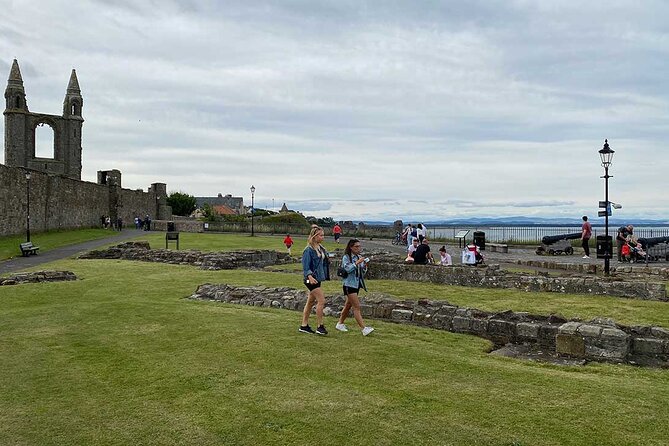
The biggest anchor stop is St Andrews Cathedral, and you get about 30 minutes here. This is the former seat of the Catholic Church in Scotland, so you’re not just looking at old stone. You’re standing in a place that mattered at a national level.
A standout detail is the ongoing search story. You learn how the town and the university were looking for the lost treasure of the famous cathedral for 50 years. That is the kind of thread that makes ruins feel active, because it connects the past to long-running effort and hope.
This stop also tends to spark the best conversations. People ask what happened during the religious shifts, and how a cathedral role changes when power changes hands. Your guide can answer questions as you walk, which is exactly when the questions are easiest to ask.
If you want maximum value from this stop, wear comfortable walking shoes and pace yourself. Cathedral time is when you might want to slow down, look around, and take in the scale.
St Andrews Castle and the Bishops Palace: spiritual peace, then Reformation change
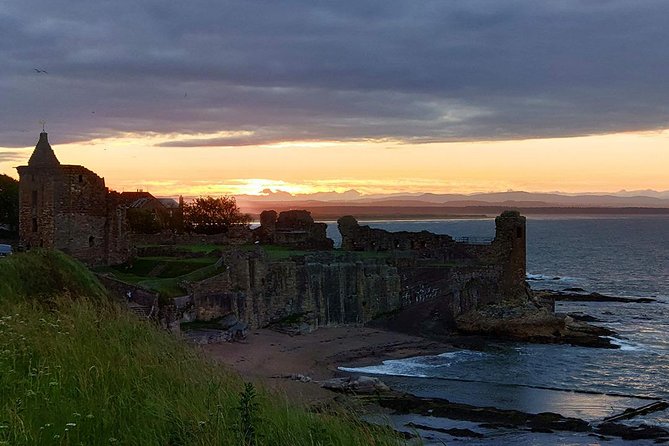
After the Cathedral, you head to St Andrews Castle, focused on the Bishops Palace from the 13th century. The tour description emphasizes that, for much of its time, there was spiritual peace. Then comes the fascinating end point, culminating in the Scottish Reformation.
Even with a short stop length here, the point is clear. The town’s story isn’t just collapse. It’s transformation. You see how a religious power center could move from stability to upheaval as Scotland’s religious landscape changed.
This is a good stop for anyone who likes political religion. If you’ve ever wondered why a town’s architecture often reflects bigger national shifts, this helps connect that dot without drowning you in dates.
University of St Andrews historic quarters: oldest in Scotland, and full of story
The tour ends with time around the University of St Andrews, about 30 minutes. You explore historic quarters connected to Scotland’s oldest university, with amazing architecture and unique history.
I like this part because it turns the university from a campus concept into a set of physical places with long memory. Instead of looking at one building, you’re guided through a sense of the university as a living institution shaped by centuries of conflict and change.
This is also where I think the tour is best for people planning more free time later. Once you understand how these quarters connect, you can wander with better instincts. You start noticing what matters, and you stop treating everything like scenery.
Ghost stories and legends: when the eerie stuff stays grounded
One reason this tour stands out from plain history walks is the tone. You hear stories and legends about inhabitants and the ghosts who may still live there.
Now, you do not have to treat every legend as fact for it to work. I think the best role of ghost stories in a history tour is emotional context. It reminds you that people once believed strongly, feared strongly, and told stories to make sense of places that were changing fast.
And since you also get concrete religious and institutional history, the spooky moments never feel random. They feel like they belong to a town where the past is always close.
What the 1 hour 30 format really means for your day
About 1.5 hours is a smart length for St Andrews. The town is compact, and the streets reward walking, but you also want time afterward to explore at your own rhythm.
This tour fits well if you:
- arrive in town mid-day and want instant context
- want a structured walk that still leaves you free to roam
- enjoy guided explanation more than museum-style exhibits
- are traveling with a family where attention span matters
It may not fit if you:
- need a slow pace due to walking difficulty
- want a long, museum-heavy experience
- prefer purely architectural sightseeing without story elements
Price and value: why this is priced like a bargain
At $20.59 per person for roughly 1 hour 30 minutes, this feels like one of those deals that makes sense immediately. You are paying for time with a historian guide, plus a route that includes multiple major stops and special access to the University of St Andrews historic quarters.
Also, the private-group nature helps value. Even if you are a small group, you still get that guided attention instead of being lost in a crowd.
If you’re deciding between a quick intro walk and a deeper history angle, this is the deeper one without eating half your day.
Weather, language, and small practical realities
The experience requires good weather. That matters because it’s a walking tour with outdoor stops. If it gets canceled due to poor weather, you’ll be offered a different date or a full refund.
You also need to understand English well. Since this tour relies on stories and explanation, good comprehension will make a big difference.
Service animals are allowed, and it’s near public transportation. Those details are useful if you’re building your day around train schedules or local bus connections.
Who should book this St Andrews history tour
Book it if you want St Andrews in story form, not just in postcard points. This tour is especially good for first-time visitors who want the Cathedral, the university, and the harbour to connect into one coherent picture.
It’s also a solid pick for families, since the tour length holds attention and the guide keeps things engaging while still factual.
If your mobility is limited or you walk slowly, I would think twice. The route is not set up for that.
Should you book St Andrews History Tours?
Yes, if your goal is to leave St Andrews understanding why it matters. You get a focused walk, access to the university’s historic quarters, and a guide named Richard Falconer who blends research with storytelling. The 1 hour 30 duration keeps the day from feeling swallowed.
Skip it only if walking is a serious challenge for you, or if you need a tour that is more flexible in pace. If not, this is a very strong value way to understand St Andrews beyond golf.
FAQ
How long is the St Andrews history tour?
The tour lasts about 1 hour 30 minutes.
Where do the tours start and finish?
Tours start at The Bothy St Andrews, 3 Church Square, St Andrews KY16 9NN, UK. Tours finish beside the Central Bar at the top of College Street by Market Street, at 75 Market St, St Andrews KY16 9NU, UK.
Do I need a printed ticket?
No. The tour uses a mobile ticket.
Is this tour private?
Yes. It is a private tour or activity, so only your group participates.
Is it suitable for children?
Under 5s are free. It is not suitable for under 2s.
What if the weather is bad?
The tour requires good weather. If it is canceled due to poor weather, you will be offered a different date or a full refund.
Recently reviewed around St Andrews
- The Original St Andrews Photo Shoot Tour★ 5.0 · 7 reviews
- St. Andrews Scenic Stroll: A Private Walking Exploration★ 5.0 · 6 reviews
- Private St. Andrews Tour with Dedicated Local Guide★ 5.0 · 38 reviews
- St Andrews Walking Tours★ 5.0 · 8 reviews
- A Wee Walk and a Cocktail in St. Andrews★ 4.0 · 7 reviews
- Watch Building Experience – St Andrews★ 5.0 · 40 reviews
- Private St. Andrews: Home of Golf Old Course Walking Tour★ 5.0 · 69 reviews
- Barrel-top whisky tasting in St Andrews★ 5.0 · 20 reviews
St Andrews & Fife Day Trips, side by side.

St Andrews & the Fishing Villages of Fife Small-Group Day Tour from Edinburgh
Read our review →
St Andrews Must-Sees Daily Walking Tour (11am & 2pm)
Read our review →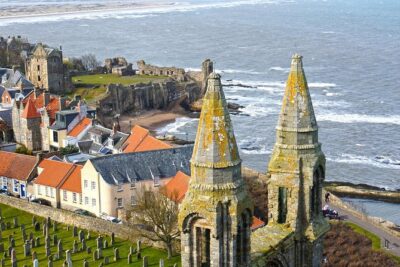

Lists this tour turns up in