
Reviewed · ST ANDREWS & FIFE DAY TRIPS
Private St Andrews: Home of Golf Old Course Tour
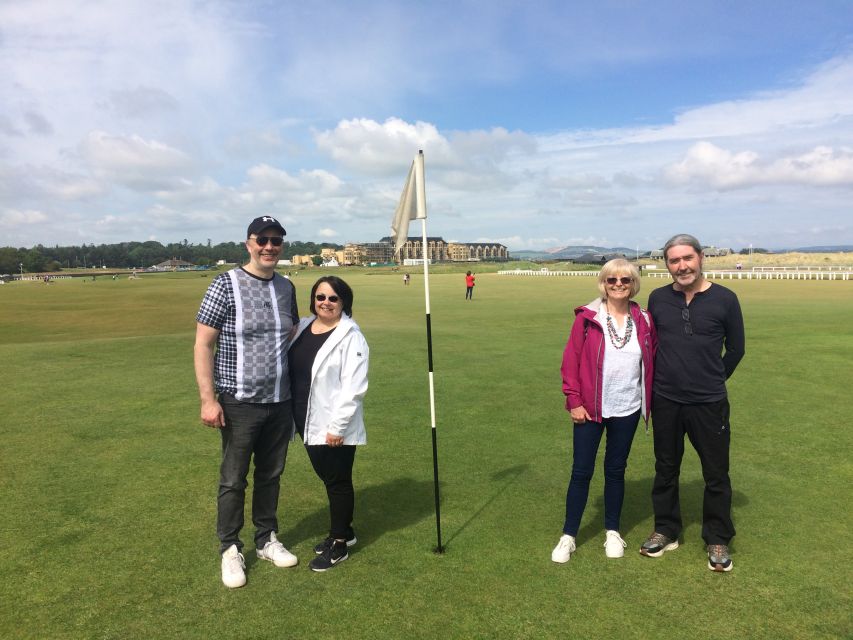
St Andrews is famous for golf, but what makes this private tour interesting is how it treats the sport like local culture, with rules, rivalries, and quirks. You get the big sights plus the human side of the game, including what people mean when they talk about Royal and Ancient politics.
I love that the route stays focused on the Old Course fundamentals you actually remember, with stops tied to the 1st, 17th, and 18th fairways and the Swilken Bridge photo moment. I also love the way your guide can bring it down to earth with personal stories, so golfers and non-golfers both have something to latch onto. One drawback to plan for: it is only 1.5 hours, so this is a walk-and-learn tour, not time for a long museum session or wandering the whole town.
Key highlights to look for
- Swilken Bridge photo at the spot that shows up in golf history books
- 1st, 17th, and 18th fairways plus time at the 1st tee and putting green
- Famous-shot locations pointed out, including The Sands of Nakajima and Eisenhower on the Old Course
- R&A World Golf Museum and Royal and Ancient Club context with insider explanations
- Compact walking route starting at Martyrs’ Monument and ending back there
- Built for mixed interests, because the story is as important as the holes
St Andrews feels like golf, but this tour tells the town story
If you only look at St Andrews through scorecards, you miss half the point. This is a private, guided walk where you learn how golf became a community obsession, and how decisions made in rooms far from the tee box can shape what you see on the course.
The best part is the blend. You get classic Old Course moments, but you also get the side conversations people rarely explain well: what the Royal and Ancient institutions care about, why traditions hold power, and where golf’s drama shows up in everyday details.
Your guide drives it. Guides you may get include people like John, Sheila, Carol, Dave, Andrew, James, and Richard, and the common thread is a friendly style plus real stories, not canned facts. If you ask questions, you will usually get answers, and the tour pace is slow enough for photos and proper stops.
More St Andrews and Fife day trips:
- St Andrews Must-Sees Daily Walking Tour (11am & 2pm)
★ 5.0 · 478 reviews - St Andrews: Golf Origins and Old Course History Tour
★ 4.7 · 322 reviews - St Andrews: Top Sights Guided Walking Tour
★ 4.7 · 223 reviews
Starting at Martyrs’ Monument: a smart anchor point
You kick off at Martyrs’ Monument, right in the heart of St Andrews. I like meeting here because it is easy to orient yourself, and it helps the rest of the tour feel organized instead of wandering around hoping you land at the right places.
From this starting point, you are not just chasing golf landmarks. You are moving through the parts of town that created the golf atmosphere in the first place. That matters because St Andrews golf is not an isolated attraction. It is built into the streets, the buildings, and the local identity.
If you prefer another city-centre meeting spot, that can be arranged by messaging in advance. The guide wears a bright orange jacket and/or lanyard, so you can spot them quickly and avoid the classic travel panic of hunting for a group.
R&A World Golf Museum and Royal and Ancient politics, explained without noise
One stop you will make is the R&A World Golf Museum area. This is where the story shifts from scenery to structure, meaning how golf’s governing bodies helped define the sport’s modern identity.
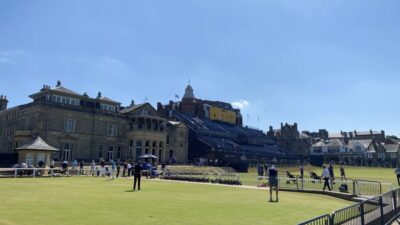
The tour also includes time with the Royal and Ancient Club and the museum context around it. What makes this valuable is not that you hear dates and names. You hear how those institutions think, and why local customs and decisions can turn into long-running controversies.
You will also get an insider-style explanation of the politics around golfing in St Andrews, framed as an insider view without the usual bias. That is a big deal if you have ever felt like sports history gets told like propaganda. Here, the goal is to help you understand why people argue about the course, the rules, and the traditions.
Practical note: if you have a strong interest in museums, you might feel slightly tempted to spend longer inside. With a 1.5-hour tour, you are getting the essentials and the perspective, not a full museum marathon.
Ladies’ Putting Club: golf culture beyond the spotlight
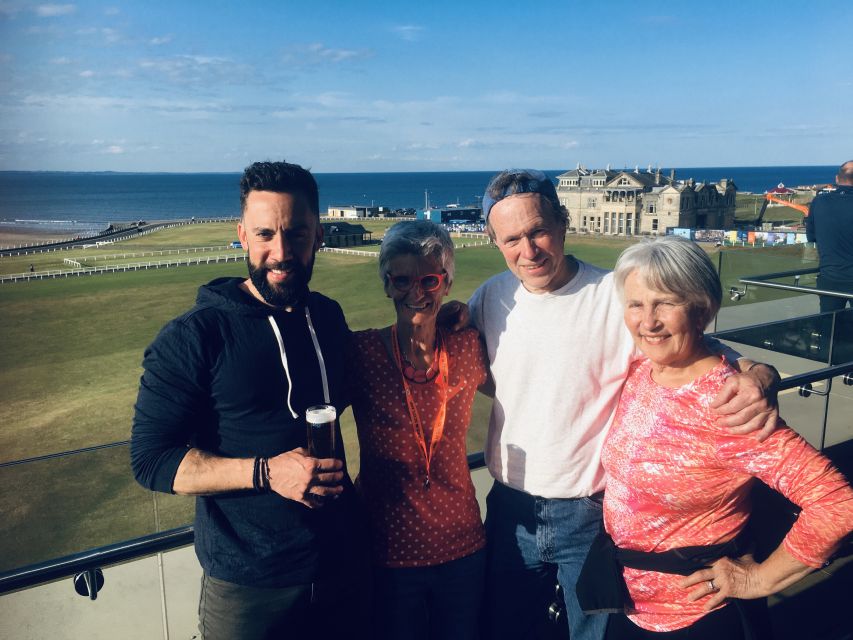
Next you visit the St Andrews Ladies’ Putting Club. This stop is easy to underestimate if you assume the Old Course is the whole story. But putting and club culture are part of how golf lives in a place, especially in Scotland where the game’s everyday rhythm matters.
I like this stop because it broadens your understanding of golf. You get to see a side of the town that is not always front-and-center in highlight reels. It also fits the tour’s overall style: small, specific places that help you understand how the sport developed and sustained community interest.
Even if you are not a golfer, this is a good point in the tour to slow down and listen. The explanations tend to focus on what makes St Andrews golf identity distinct, and why the town has kept so many traditions alive.
Some other St Andrews tours to weigh up
- St Andrews: Town Highlights Private Guided Walking Tour
★ 4.9 · 25 reviews - St Andrews: Private Dark Side Guided City Tour
★ 4.6 · 3 reviews - St Andrews: Private Guided Walking Tour for Future Students
★ 5.0 · 3 reviews - From Edinburgh: St. Andrews & Fife Luxury Private Day Tour
★ 5.0 · 3 reviews
Old Course time: 1st tee, putting green, and where to stand
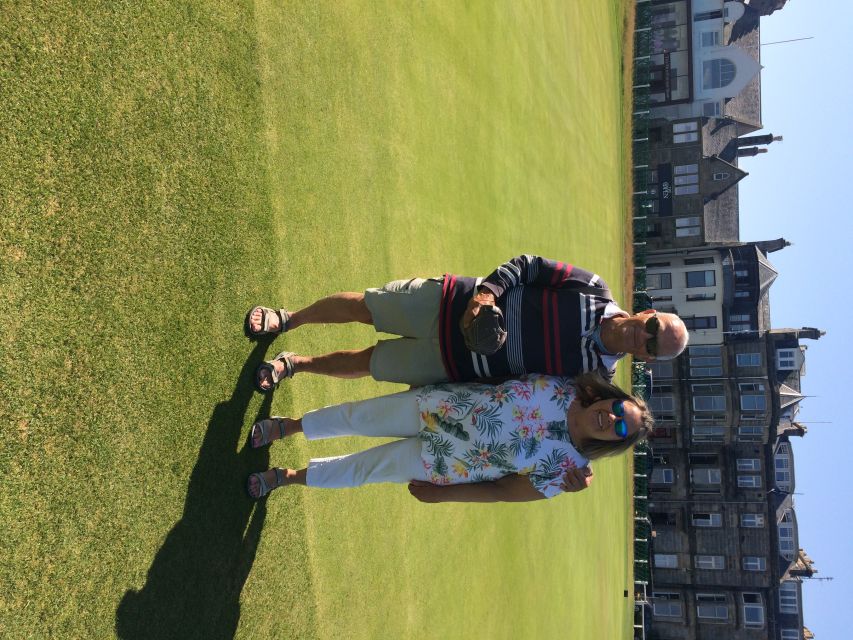
The main action happens at Old Course, St Andrews, where you spend sightseeing time at key spots. This is where the tour turns from history talk into real location-based understanding.
You do not just drive past big points. You are guided to areas tied to the tour’s headline learning: the 1st tee and 1st fairway, plus the 17th green and 18th fairway.
Here is what I think is especially useful about this approach. Golf history can feel abstract when you only see photos. Standing near the spots where famous shots landed makes the story make sense fast. You start to understand why certain moments are so legendary, and why course strategy is part of the mythology.
If you are a golfer, you may enjoy how the guide frames course features for storytelling, not swing instruction. If you are not, you will still likely appreciate it because the explanations are about meaning: what people were trying to do, what made the shot matter, and why St Andrews keeps repeating itself in golf culture.
The famous-shot locations you will be pointed to
During the Old Course segment, your guide points out the locations behind iconic golf moments. Examples include The Sands of Nakajima and Eisenhower on the Old Course.
Even if you have never played a round there, these names are like golf shorthand for dramatic pressure and memorable outcomes. Hearing them tied to a physical spot helps you “read” the course like a story instead of a collection of holes.
One caution: the Old Course can be busy or have access limitations depending on the day. Your guide will work within what is possible, but it helps to keep your expectations flexible. If you arrive on a quieter day, you often get better photo timing and more time for questions.
The Links segment: seeing the setting that shaped the game
The tour includes time at The Links. This matters because links golf is not just a style label. It is the environment that made the sport what it is in Scotland, with strategy influenced by terrain, wind, and the feel of playing on natural ground.
On a tour like this, you are not trying to become an expert in coastal meteorology. You are getting the context that explains why the Old Course is so talked about. When your guide ties course behavior to the setting, you understand the course differently, even if you have never stepped on it before.
Also, this is a practical part of the walk. The route keeps moving, so you do not get stuck in one spot waiting for the group to catch up. You get a steady flow of sights, then pauses where the guide actually wants you to look.
Swilken Bridge: the photo stop that ends the story
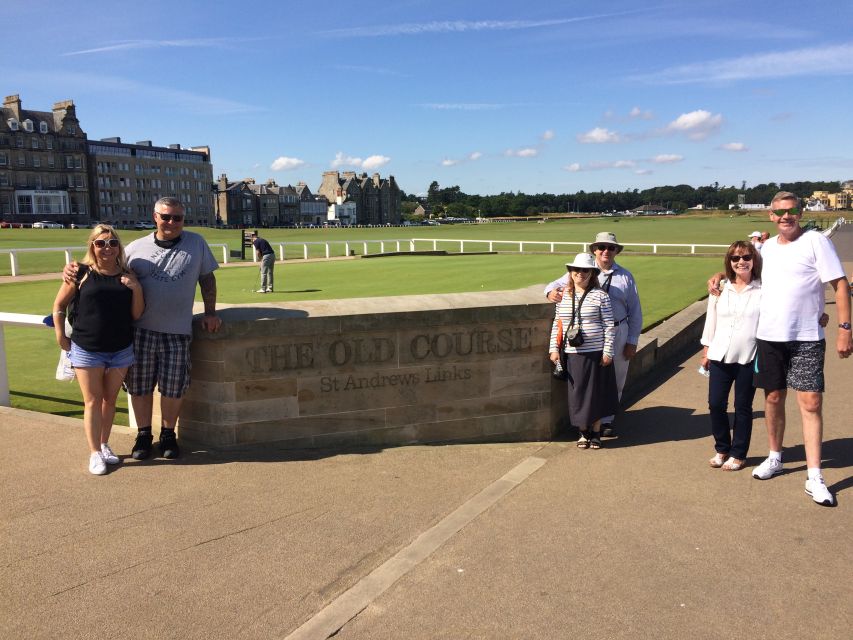
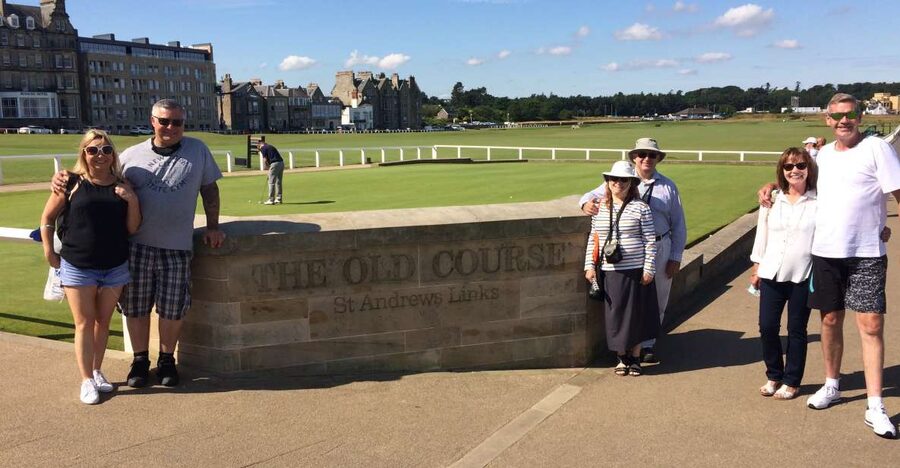
You finish with Swilken Bridge, one of the most famous photo moments in golf. This is exactly the kind of ending that works for a short tour because it gives you a clear memory anchor.
More importantly, your guide uses this stop to tie the whole experience together: the institutions, the course culture, and the famous shot locations all circle back to this iconic image. Even if you are not into taking many photos, this is a spot you will probably want at least one at.
It is also a good moment to ask final questions. Guides tend to be most relaxed here, and you can get practical recommendations for the rest of your St Andrews day.
Pace, walking, and who the $183 price makes sense for
Let’s talk value, because $183 per group (up to four people) can feel either like a bargain or a splurge, depending on how you compare it.
For up to four people, the per-person cost can drop quickly if you travel as a pair or a small family. And you are paying for a dedicated local golf expert for 1.5 hours, not just a general sightseeing walkthrough. That matters in St Andrews because golf knowledge is hard to replicate on your own, especially when it includes the town’s political and cultural layers.
The pace is another part of the value. Multiple guides on this kind of tour are praised for getting the timing right, keeping the amount of info balanced, and slowing down for photos. Also, the route is compact enough that you are not stuck doing a long hike. If your group has mixed interests, this length helps you satisfy golf-focused people without exhausting everyone else.
Who this suits best:
- Golf lovers who want to understand the Old Course beyond a photo
- People celebrating a milestone tied to golf
- Couples where one person cares deeply about golf history
- Non-golfers who still enjoy stories, places, and local character
If your ideal St Andrews day is a long, independent museum-and-street wander, this might feel short. Think of it as the perfect opener or closer, then let the rest of the day belong to you.
Practical tips so your tour lands smoothly
A few things will make the experience easier from the start.
Bring comfortable shoes. You are on a walking route around key course and town areas, and the Old Course terrain does not forgive flimsy footwear. Also bring weather-appropriate clothing, because Scotland weather can change fast.
Timing helps too. If you can plan around quieter moments, you may enjoy a more relaxed flow for photos and questions. A Sunday can be different from a weekday, and course access can vary, so it is worth keeping your plans flexible.
If you want to maximize your day after the tour, ask your guide for food and shopping tips. One example from the local guide world is Dunvegan’s pub for a classic pint stop nearby.
Should you book the Private St Andrews Old Course tour?
Book it if you want your Old Course experience to come with context, meaning, and a human voice. The tour is short, but it hits the big course spots, explains the Royal and Ancient side of the story, and ends in the right place for that Swilken Bridge memory.
Skip it if your goal is a long, independent visit where you control every stop and linger inside museums for hours. This is designed as a focused walk with a local expert, not as a self-guided all-day pass.
If you are traveling with up to four people and at least one of you is invested in golf history, this is strong value. And if you are not sure you will enjoy golf talk, the structure is still friendly, because the guide’s stories can keep the focus on the town, not just the game.
FAQ
How long is the Private St Andrews: Home of Golf Old Course Tour?
The tour lasts 1.5 hours.
What is the price for this private tour?
It costs $183 per group, up to 4 people.
Where does the tour start, and how do I find the guide?
The starting point is Martyrs’ Monument. The guide will be wearing a bright orange jacket and/or lanyard.
What places do you visit during the tour?
You visit the R&A World Golf Museum, St Andrews Ladies’ Putting Club, Old Course St Andrews, The Links, and Swilken Bridge, then return to Martyrs’ Monument.
Does the tour include the 1st, 17th, and 18th parts of the Old Course?
Yes. The highlights include time at the 1st, 17th, and 18th fairways, along with the 1st tee and putting green, the 17th green, and the 18th fairway.
What language is the live guide?
The live tour guide speaks English.
Is this tour wheelchair accessible, and what should I bring?
It is wheelchair accessible. You should bring comfortable shoes and weather-appropriate clothing.
Recently reviewed around St Andrews
- St Andrews: Guided Walking Tour, 12pm, 2pm daily★ 5.0 · 28 reviews
- St Andrews: Private Dark Side Guided City Tour★ 4.6 · 3 reviews
- St Andrews: 90-Minute Historical Walking Tour★ 4.8 · 23 reviews
- St Andrews: City Highlights Walking Tour with Cocktail★ 5.0 · 10 reviews
- St Andrews: Private Guided Walking Tour for Future Students★ 5.0 · 3 reviews
- St Andrews: Town Highlights Private Guided Walking Tour★ 4.9 · 25 reviews
- From Edinburgh: St. Andrews & Fife Luxury Private Day Tour★ 5.0 · 3 reviews
- From Edinburgh: St. Andrews Day Trip for Small Groups(1-4)★ 4.9 · 14 reviews
St Andrews & Fife Day Trips, side by side.

St Andrews & the Fishing Villages of Fife Small-Group Day Tour from Edinburgh
Read our review →
St Andrews Must-Sees Daily Walking Tour (11am & 2pm)
Read our review →
Lists this tour turns up in